Christmas Traditions at St. Stanislaus
|
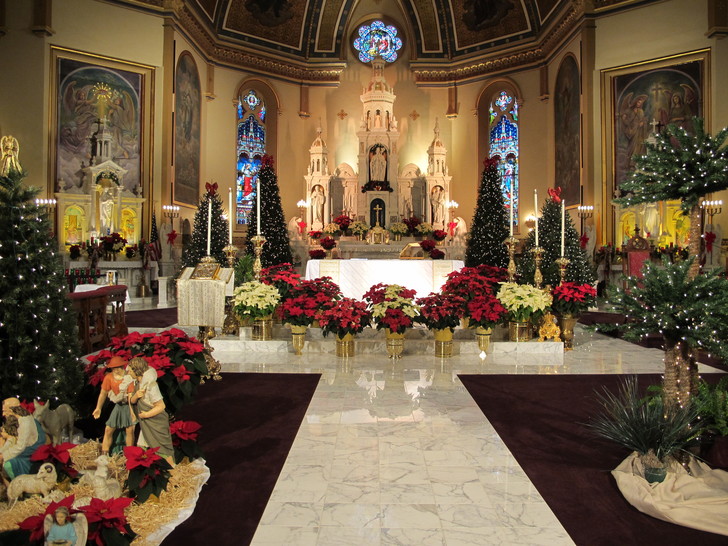 |
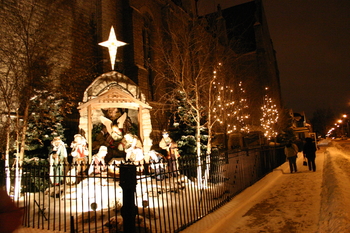
| Our Famous Christmas Display at St. Stan's, Historic Polonia District, Buffalo |
|
|
|
2015 Holiday Schedule
Sunday, November 15th
Harvest Brunch & Basket Raffle 10am-2pm
Marian Hall @ St. Stan's Social Center
Thursday, November 26th
Thanksgiving Day Mass, 9am
Wednesday, December 2nd
Advent Confessions 5-6:30p
Sunday, December 6th
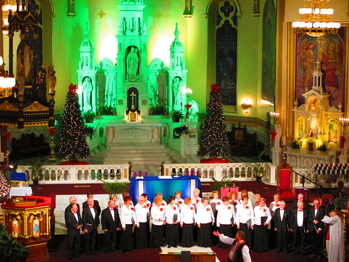
Kolendy/Christmas Carols Concert, 3:30pm
Tuesday, December 8th
Immaculate Conception of the Blessed Virgin Mary
Masses at Noon & 6:30p
Wednesday, December 9th
Advent Confessions 5-6:30p
Wednesday, December 16th
Advent Confessions 5-6:30p
Sunday, December 20th
Polish Saturday School Jaselka, 1:30pm Wednesday, December 23rd
Advent Confessions 5-6:30p Thursday, December 24th Pasterka 12am, (Midnight Mass)
Singing of Kolendy begins at 11:30pm Friday, December 25th Christmas Day Masses at 9am & Noon (Polish) Thursday, December 31st New Years Eve Mass, 4pm Friday, January 1st New Years Day Masses at 9am & Noon (Polish)
(As of Dec 9, 2015) Subject to change. Consult weekly bulletin or our Facebook page for updates.)
|
Q: How do you say Merry Christmas and a Happy New Year in Polish? A: Wesołych Świąt Bożego Narodzenia i Szczęśliwego Nowego Roku
|
|
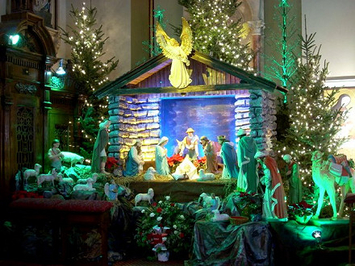 |
| Nativity scene inside Historic St. Stan's Buffalo |
|
|
 |
| Faithful arrive for Midnight Christmas Eve Mass at St. Stanislaus Church, Historic Polonia District, Buffalo, New York |
|
|
 |
| Sunday, December 2, 2012 |
|
|
|
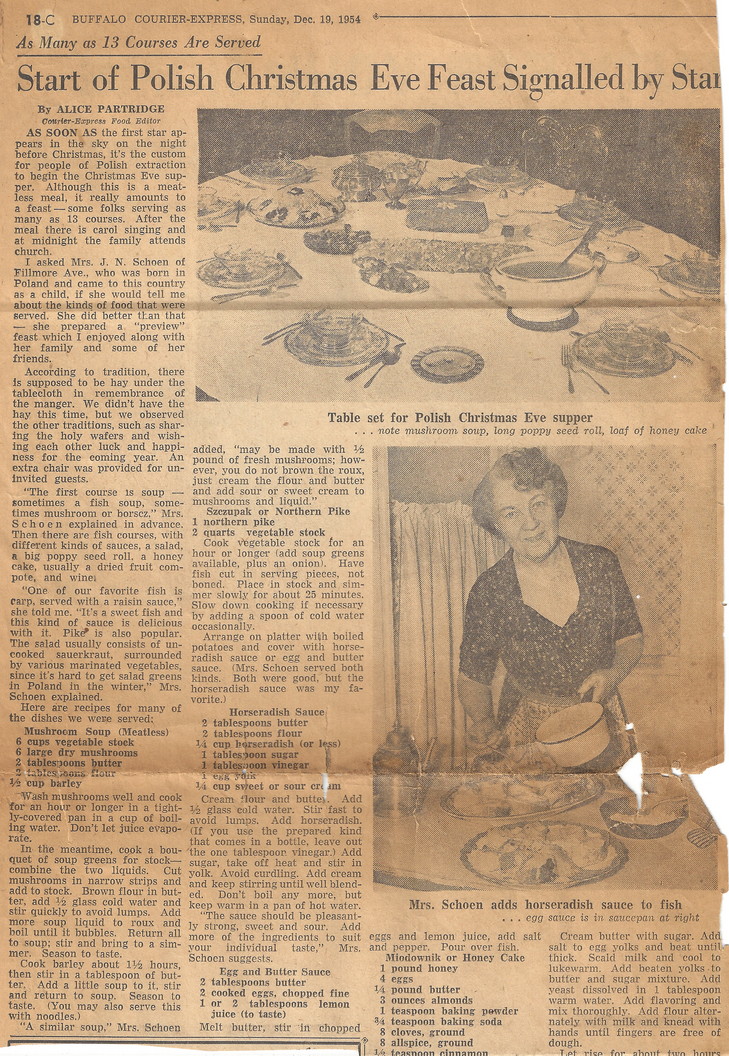
The Christmas Eve dinner known as Wigilia is one of the most important events of the Christmas season anxiously awaited by one and all. Family members prepare for this feast for many days and even weeks.
|
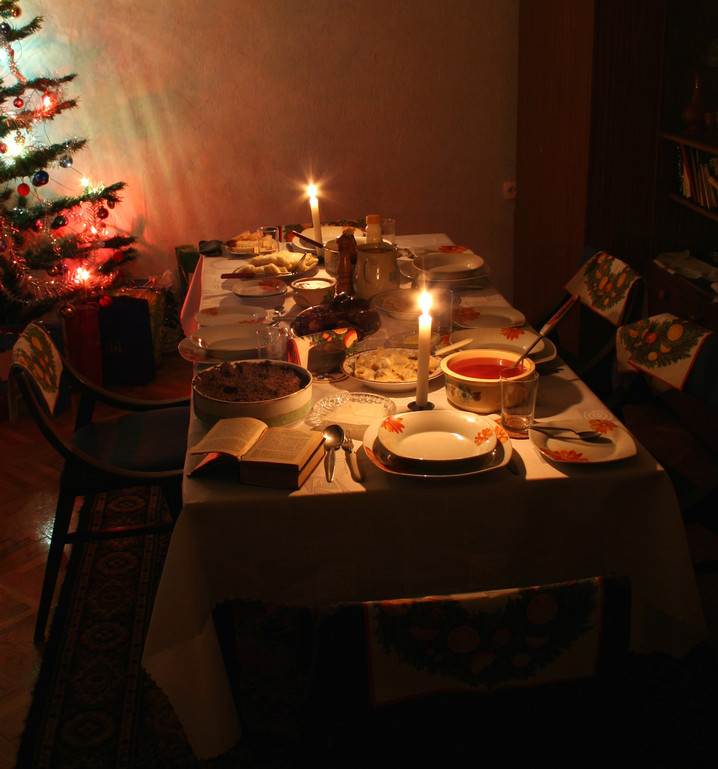 |
| Click image above to visit the St. Stan's Polish Kitchen page for wonderful traditional recipes |
|
|
Baking – pierniki or honey cakes in a variety of shapes such as hearts, animals or St. Nicholas figures are made.
Decorating – the Christmas crèche is readied as well as the tree trimmings which include cherished heirlooms, bright red apples, walnuts wrapped in silver and gold foil, candy canes, candles, paper chains, and a star for the top.
Setting the Table – straw would be placed on the table to remind everyone of Christ’s birth in a manger. On top of the straw a white tablecloth was spread to represent the swaddling cloth wrapped around the Baby Jesus. A lighted candle should be placed in the window and the number of place settings at the table should include an empty spot for the chance that the Godchild, in the guise of a visitor, might arrive to join in the feast because it was said, “A guest in the home is God in the home.” There is a discrepancy over the number of people invited to sit down at the table. Some believe it must be an even number while others insist an odd number is required so as not to eliminate the hope of increased wealth or anything desirable for the New Year. It is also thought that the wrong number of people at the feast might mean that some of the feasters might not be in attendance at the next Wigilia.
Cooking the Food – Depending on the source of information, the Wigilia meal may have an odd number of meatless courses such as 7, 9, or 11, or it must have 12 courses to represent the twelve months of the year and /or the twelve apostles. All of the main sources of food should be used: grain from the fields, vegetables from the garden, fruit from the orchard, mushrooms from the woods, and fish from the water.
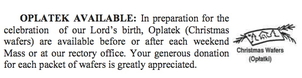
Enjoying the Meal – With everyone present at the table, the feast begins with the head of the family sharing the oplatek with his wife and then they both share the wafer with the other family members and guests. Forgiveness for wrongs incurred to others and wishes for health, happiness, and prosperity are uttered as the pieces of the oplatek are broken off. Then the dishes of prepared food are ready to be consumed.
|
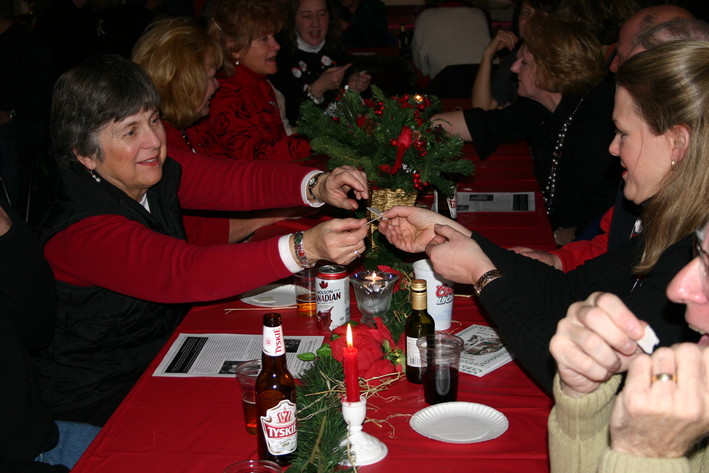 |
| Breaking of the Oplatek at the St. Stan's Athletic Club |
|
|
Celebrating After Dinner – When the meal is finished, everyone gathers around the Christmas tree to sing traditional Christmas carols (koledy), recount stories, and let the children open their presents. Then a trip to church for the Midnight Mass or pasterka (shepherd’s watch) was on the agenda to close out Christmas Eve and welcome the birth of the Infant Jesus. Legends say that at the midnight hour the animals are given the ability to talk and only the pure of heart will be able to hear them.
|
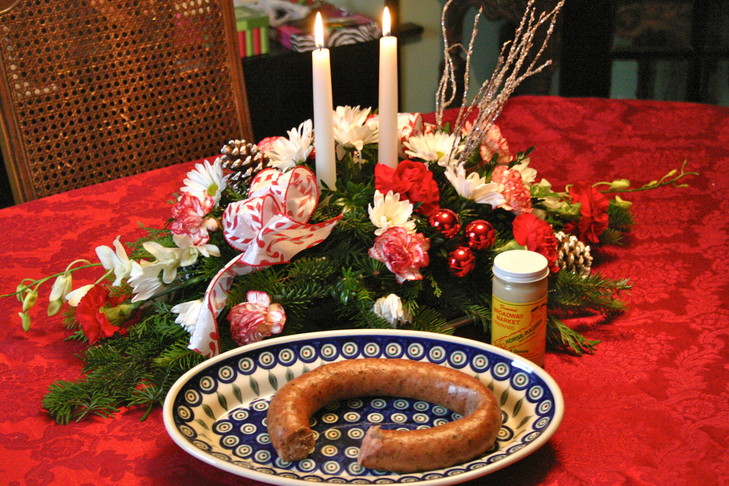 |
| Christmas Day or anytime during the holidays serve up some Polish holiday sausage made with extra garlic & marjoram seasoning. Did you know that the Wardynski Sausage Company is located right next door to St. Stan's church? View a vintage Wardy commercial by clicking image above. |
|
|
A Polish Christmas Calendar
Advent - The four Sundays before Christmas signifying the 4000 years of waiting for Christ. An advent wreath with three purple candles and one rose colored candle is placed near the altar and each Sunday one more candle is lit until all four are glowing the Sunday before Christmas Day. In homes, it is a time of preparation, also. Special honey cakes (pierniki) are baked and decorations are being made or brought out once again to adorn the rooms and Christmas tree. Traditional ornaments are apples, walnuts and candy wrapped in shiny paper, candles, paper chains, and a star for the top of the tree.
St. Nicholas Day – On December 6th, Swienty Mikolaj, or the
Father of Christmas comes to visit the children and question them on their catechism. He wears his bishop’s robes and carries his shepherd’s crook. Small gifts are handed out to the children who have been good all year to remind them of the gifts brought to the Christ child by the Magi. The use of candy canes to represent the Bishop’s staff and the custom of gift giving at Christmastime are said to come from the celebration of this day.
Christmas Eve – According to an old Polish saying, “as Christmas Eve goes, so goes the year.” On December 24th everyone prepares for the evening meal or Wigilia. It is a peaceful day with no arguing which, if it occurs, will bring discord to the home for the following year. Everyone has some job to do to prepare for the evening’s celebration involving cleaning, cooking, preparing the table and completing the decorating of the home. Festivities begin with the spotting of the first evening star (Gwiazdka) in the eastern sky and the sharing of the oplatek by the head of the household with other members of the family and guests. Each person breaks off a piece of the communion-like wafer stamped with holy images and wishes each other good health, wealth, and happiness for the coming year while asking forgiveness for any wrongs committed toward each other. The meatless meal consisting of many courses is enjoyed by all. After the meal, Christmas carols (koledy) are sung around the Christmas tree (choinka), stories are related, and children may open their presents. The evening’s celebrations at home are ended when it is time to celebrate Christ’s birth at the Pasterka or Shepherd’s Mass in church.
Christmas Day – A relatively quiet day spent receiving guests and visiting friends and family.
New Year’s Eve – December 31st, in Poland, was a day to address
unpunished pranks which happened during the year. Things would be hidden, objects disassembled and reassembled in unusual places (like a farm wagon being found on top of a roof,) and other such happenings to oust out the old year. Everyone would be quickly forgiven. In the evening, balls were held which always would begin with the polonaise a very stately, traditional polish dance.
New Year’s Day – A day that was traditionally one for bread-baking with the loaves made into the shapes of animals. The bread was often given by godparents to their godchildren to assure wealth for the whole year.
Epiphany – January 6th. (Trzech Kroli), commemorates the
visitation of the Magi and presentation of gifts of gold, frankincense and myrrh to the Infant Jesus. Chalk is blessed and is distributed to the people to take home and to mark their doorways with the initials of the Three Kings. The letters: “K” for Kaspar, an “M” for Melchior, and a “B” for Balthazar, separated with crosses are written on the doorframes to bless the home for the coming year.
Candlemas Day – On February 2nd, candles are brought to church to be blessed. These will then be used during the year in times of storms, sickness, or death. This day marks the end of the Christmas Season.
|
|
|